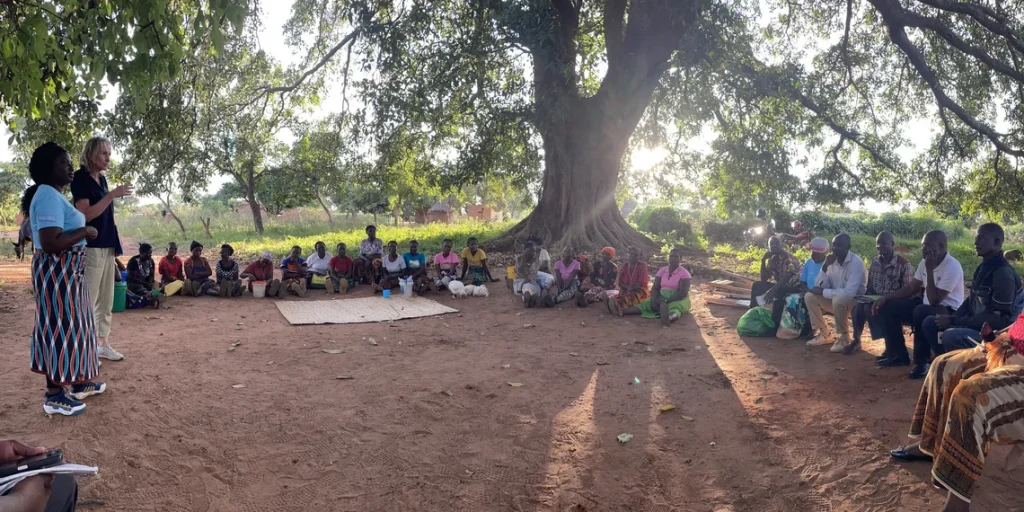
In Western Zambia, 30 community-based savings groups are helping 450 households build financial security, strengthen livelihoods and increase women’s participation in household and community financial decisions. Through regular savings, financial education and access to small internal loans, participating families are better equipped to manage unexpected expenses, invest in income-generating activities and plan for the future.
Problem Situation
Many households in Western Zambia depend on irregular incomes, making it difficult to save, plan for the future or respond to unexpected expenses. Women often manage everyday household finances but have limited access to their own financial resources and limited influence over major financial decisions, while access to formal financial services remains challenging.
Activities
NACRO supports communities in establishing and strengthening 30 locally managed savings groups in Mongu, Kalabo, Kaoma, Limulunga and Sioma. Members regularly save small amounts, jointly establish transparent rules and procedures, and receive training in financial management, budgeting, saving and responsible borrowing; community members and local leaders are involved to strengthen ownership and promote gender equality.
Outputs
Thirty independently operating savings groups have been established, involving 450 households and approximately 2,250 people. Members have access to a shared savings fund and internal loans for urgent needs and small income-generating activities, while trained field officers and community-based multipliers provide ongoing organisational and financial education support.
Outcomes & Long-Term Impact
Outcomes:
Participating households improve their ability to plan income and expenditure, build financial reserves and invest in small economic activities. Women gain greater access to financial resources, participate more actively in financial decision-making and strengthen their confidence and economic agency.
Long-Term Impact:
As savings groups mature, members can form registered cooperatives to pursue joint economic activities and access additional financing opportunities, including relevant government programmes. In the long term, stronger household livelihoods, increased economic participation by women and greater community cooperation contribute to improved living conditions and greater economic resilience in Western Zambia.