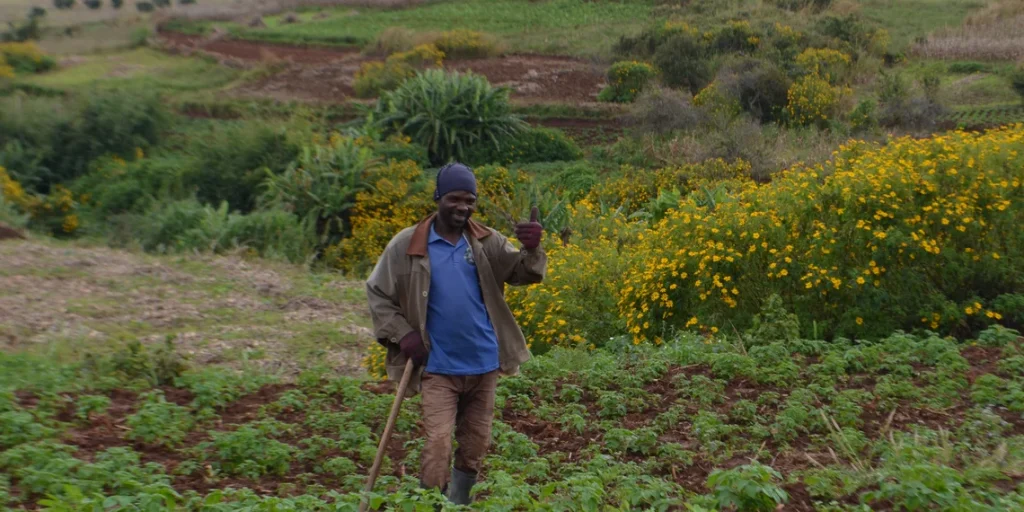
There are many places in the world where farming is the only way for people to survive. However, without a sufficient water supply, this is a sad reality for many smallholder farmers, as they are unsure whether they can produce enough to survive the next few years, or even months. The unpredictable rainy season and increasingly long heat waves exacerbate the situation. In Mtendere, 200 smallholder farmers and their families are feeling the effects of the climate crisis all the more acutely. In addition to the problem of irregular rainy seasons, these farmers lack reliable water resources and knowledge of modern agricultural practices. To address these issues, we have begun rehabilitating and relocating the regional irrigation system’s pipe network and are carrying out further related activities.
Saving the unused irrigation system for more productive use
An existing irrigation system is located in the village of Mtendere, in the Ntcheu district of Malawi. Originally developed by the Malawian government, it has been left unused, unattended, and unproductive for the community: the water channels are unlined, the dams in the rivers are damaged, and the structures for diverting water from the rivers into the channels are unreliable. All of this leads to significant water losses in the transport systems and consequently to an inadequate water supply.
To fully utilize the irrigation system’s potential, it is being repaired and expanded. The program also includes the installation of pumping stations, pipe networks, canals, distribution systems, and erosion control measures. A well-coordinated and hydraulically sound network is crucial for a highly efficient distribution system and, consequently, for sound water resource management and environmental sustainability.
A glimmer of hope for 200 small farmers
The installation and renovation of the irrigation system will sustainably supply the village, home to 200 smallholder households with an average of up to 1,000 inhabitants, with sufficient water. As a result, the pipe network will be able to irrigate well over 15 hectares of land.
To ensure the sustainability of the irrigation project, several comprehensive training courses are planned, starting in 2025. These courses will cover: management of the water users’ association; training for senior farmers; irrigation and pipeline network management; business and marketing management; development of operating and maintenance manuals; and training in environmental management and climate-resilient agriculture, including organic farming, crop diversification, and conservation agriculture (sustainable farming).
In addition to the agricultural activities, at least five savings and investment groups will be established by June 2025. These groups will include project participants and other residents living in the immediate vicinity of the target area. The target group will learn the basics of financial planning and investment. A group fund will serve as a kind of bank, allowing participants to borrow money for investments and repay it with interest. The funds accumulated collectively will enable smallholder farms to finance future repairs to the water infrastructure themselves.
Furthermore, the project also addresses ways to improve equal access for men and women to the benefits of an improved irrigation system. They will be made aware of the role of women in agriculture so that they understand the crucial rules and women’s contribution to family income.