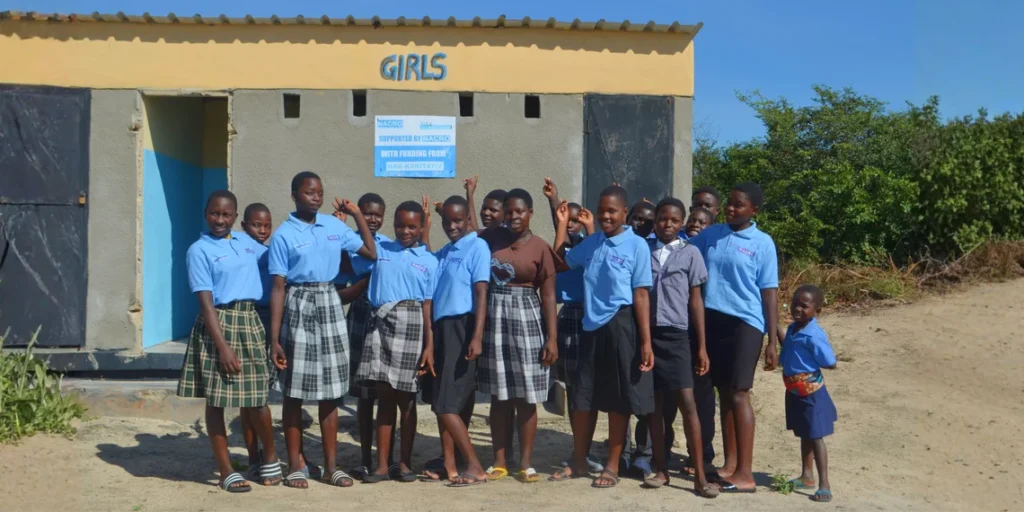
Since 2019, NACRO Zambia has been improving access to safe water, sanitation and hygiene (WASH) in primary schools in Western Province. The project combines water and sanitation infrastructure with hygiene education, school gardens and community engagement to improve children’s health, school attendance and learning opportunities, with particular attention to girls and equal participation.
Problem Situation
Many schools in Western Zambia lack reliable access to safe drinking water, adequate sanitation and hygiene facilities. Poor WASH conditions contribute to diarrheal diseases, absenteeism and disruptions to learning, while girls face additional challenges during menstruation when safe and private washing or resting facilities are unavailable.
Activities
NACRO installs and rehabilitates water systems, constructs safe and gender-sensitive sanitation and washing facilities, and provides hygiene and nutrition education in primary schools. Schools are also supported in establishing gardens, while WASH clubs, teachers, pupils and community volunteers are trained to promote good hygiene practices and share knowledge with families and surrounding communities.
Outputs
In the first phase, the project reached 28 schools—three more than originally planned—with more than 9,800 children and over 150 teachers benefiting from improved WASH facilities and learning opportunities. Wells were drilled or repaired, toilets and washing facilities were constructed, school gardens established, and WASH clubs strengthened; children and teachers have increasingly taken ownership of hygiene promotion and shared their knowledge beyond the school environment.
Outcomes & Long-Term Impact
Project objective and direct impact:
Improved access to safe water, sanitation and hygiene contributes to healthier school environments, better hygiene practices and more regular participation in education. Dedicated washing and sanitation facilities for girls help reduce barriers to attendance and support greater dignity, safety and equality in everyday school life.
Overall objective and indirect, long-term impact:
The project contributes to improved health, educational opportunities and resilience among children and communities in Western Zambia. By linking schools with families and surrounding communities, it promotes lasting behavioural change and strengthens local awareness of health, environmental responsibility and sustainable water use.