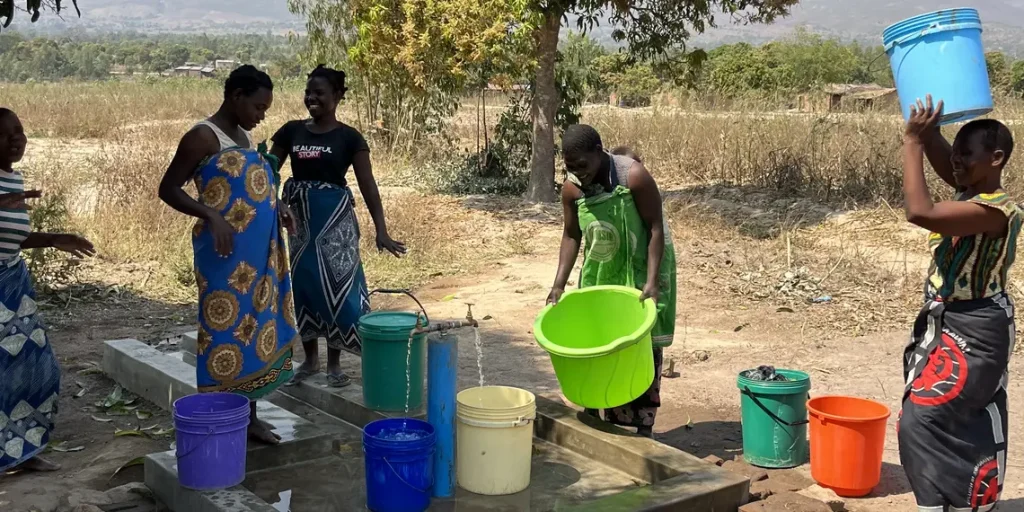
Malawi faces enormous challenges in water access and sanitation, particularly in rural areas. Around 2.4 million people in Malawi lack access to clean water, and many more are affected by malfunctioning water sources. The situation is especially worrying in areas like Chindi, where more than 130,000 people live, yet only about three-quarters of the population has access to clean water. In rural regions like this, people are heavily reliant on water, as many cultivate their own land to earn their living. Unfortunately, very little funding – just a small portion of the national budget – is allocated to water supply, despite the urgent need. This underscores the importance of swift and sustainable action to improve the quality of life for those affected. In addition to water issues, inadequate sanitation and menstrual hygiene pose further significant risks, particularly for women and girls. They are often forced to walk long distances to water sources and lack access to safe sanitation facilities. Our project addresses precisely this issue: By improving water and wastewater infrastructure and promoting hygiene and sanitation solutions for households, schools, and markets, we aim not only to improve the quality of life but also to strengthen gender equality. We want to create sustainable solutions that contribute to the economic and social self-determination of the affected regions.
Clean water and sanitation: Transformation of 12 villages in Chindi
Our goal is to reach 7,708 villagers in 12 villages of Chindi, comprising 1,500 households with an average of five people per household. This project includes the establishment of water extraction points and the construction of sanitation facilities at five schools and a health center. This development will directly benefit the entire population of the region by improving access to clean drinking water and hygiene facilities. In addition, 234 participants will be trained as multipliers, including 210 members of 21 WASH (Water, Sanitation, and Hygiene) committees and 24 community-based facilitators. These WASH committees, formed around water extraction points, boreholes, schools, and the health center, each have 10 members. Members will be trained in water management and hygiene practices and will be responsible for disseminating this knowledge within their households and communities. This structure ensures the sustainability of the project’s impact by empowering local leaders to take on key roles in the maintenance of water and wastewater systems, thereby improving the health and well-being of the entire region.
Promoting gender equality and economic growth
In the second half of the project, 12 savings groups, each with up to 20 members, will be formed, comprising a total of 240 members. Two members of each group will be trained as community mediators in basic financial and business skills. At least half of the members, including those in leadership positions, will be women, to empower them economically and socially within their communities. These savings groups will improve women’s ability to invest in resources such as seeds, fertilizer, livestock, or even to pay their children’s school fees, thereby enhancing their position and opportunities within the village.
The impact of your support
Your support and contribution to our project is crucial in transforming the lives of people in 12 villages by providing them with clean drinking water, sanitation, and medical care. It also promotes gender equality and improves economic opportunities. While this may be a basic right in more privileged areas, for these villages it is a beacon of hope and a step towards a better future. Together, we are not only improving living conditions but also empowering women and girls who face significant challenges and inequalities.