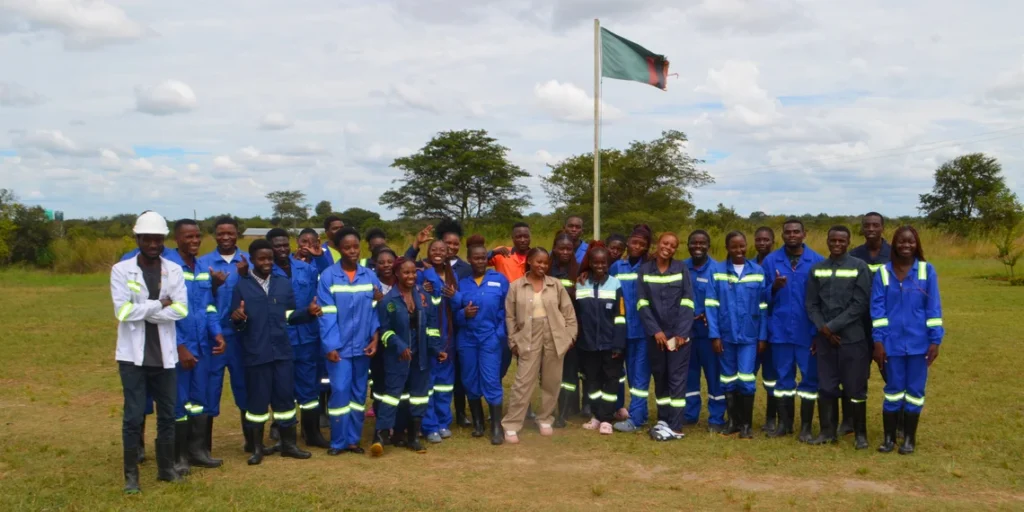
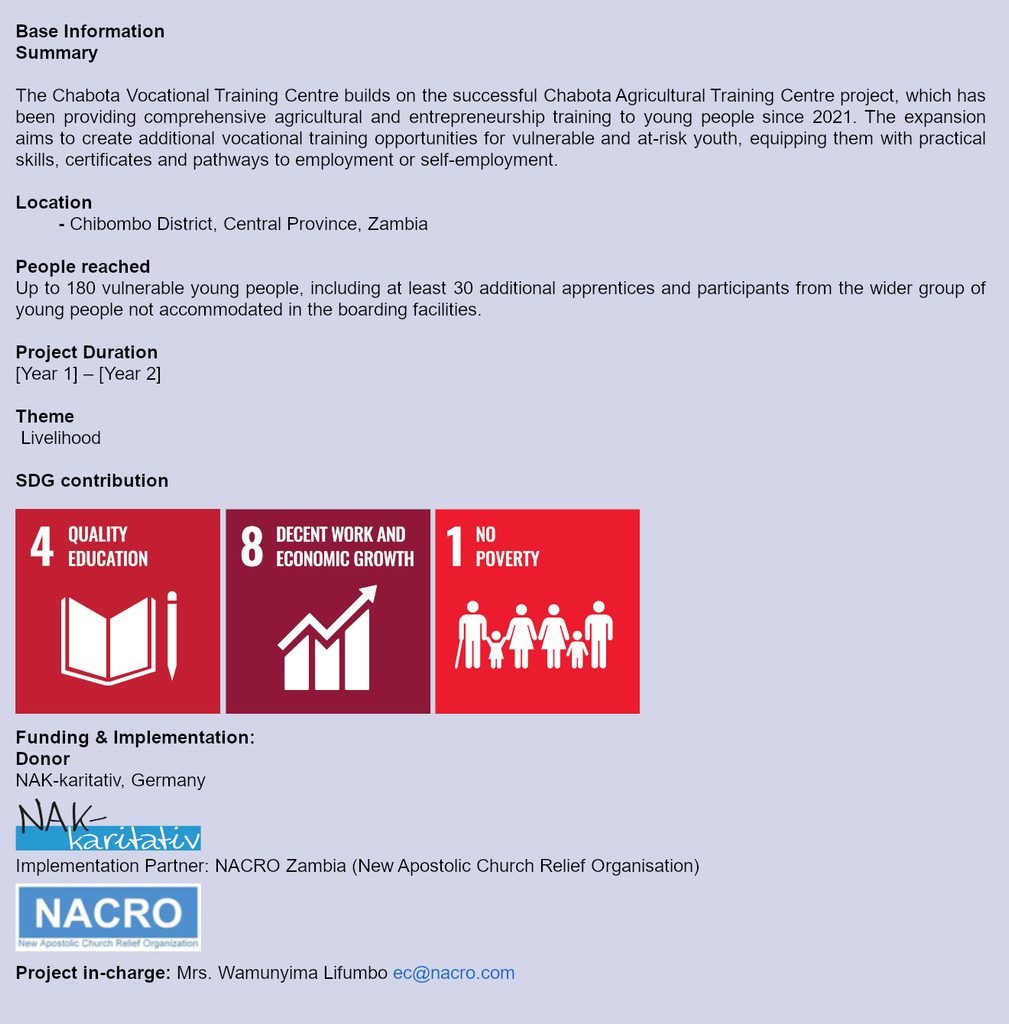
The Chabota Vocational Training Centre builds on the successful Chabota Agricultural Training Centre project, which has been providing comprehensive agricultural and entrepreneurship training to young people since 2021. The expansion aims to create additional vocational training opportunities for vulnerable and at-risk youth, equipping them with practical skills, certificates and pathways to employment or self-employment.
Problem Situation
Many young people in Zambia face limited access to vocational education, employment and opportunities for sustainable income generation, particularly those from vulnerable backgrounds. The high demand for training at Chabota demonstrates the need to expand practical skills development so that more young people can build independent livelihoods and contribute to their communities.
Activities
NACRO is expanding the Chabota Vocational Training Centre by establishing and equipping wood and metal workshops and introducing practical courses such as carpentry and joinery, metalworking, computer skills, tailoring, agriculture and food and beverage production. Young people participate through vocational training and practical production, with selected participants supported through education vouchers, while the workshops will produce and sell items such as desks, tables, beds and chairs to generate income for the centre.
Outputs
The project expands the centre’s training capacity and provides vulnerable young people with access to market-oriented vocational courses and practical work experience. Participants who successfully complete their training receive certificates, while the new workshops and production activities create additional income opportunities for the training centre and help strengthen its financial sustainability.
Outcomes & Long-Term Impact
Project objective and direct impact:
Young people gain relevant technical, entrepreneurial and life skills that improve their prospects for employment, self-employment and sustainable income generation. The training strengthens their confidence, economic independence and ability to make informed choices about their future.
Overall objective and indirect, long-term impact:
The project contributes to reducing youth unemployment and poverty by enabling young people to become qualified, economically active and responsible members of their communities. In the long term, increased access to vocational skills and sustainable livelihoods can strengthen local economies, support community development and help break cycles of poverty.